
A retail display is usually judged by what shoppers see.
Does it stand out?
Does it communicate the product clearly?
Does it encourage shoppers to stop, interact, and buy?
Those questions matter. But retailers and store teams see another side of the display entirely.
They have to receive it.
Set it up.
Move it into position.
Keep it stocked.
Maintain it throughout the promotion.
And eventually remove or replace it.
That means a successful retail display cannot only work for the shopper. It also has to work for the people operating the store.
From setup time and replenishment to floor space and maintenance, display decisions can directly affect day-to-day store operations.
Here is where those decisions matter most.
1.Display Setup Affects Store Labor
The operational impact of a display begins almost immediately after it arrives.
Some displays reach the store nearly ready to merchandise. Others arrive flat-packed and require multiple assembly steps before products can be loaded.
The difference matters.
A display that requires complicated assembly can create:
- Longer setup times
- Additional labor requirements
- Incorrect assembly
- Inconsistent execution between locations
- Delays in getting products onto the sales floor
This becomes especially significant when a retail program is deployed across hundreds or thousands of stores.
Saving a few minutes on one display may not sound significant. Saving those same minutes across an entire retail network can be.
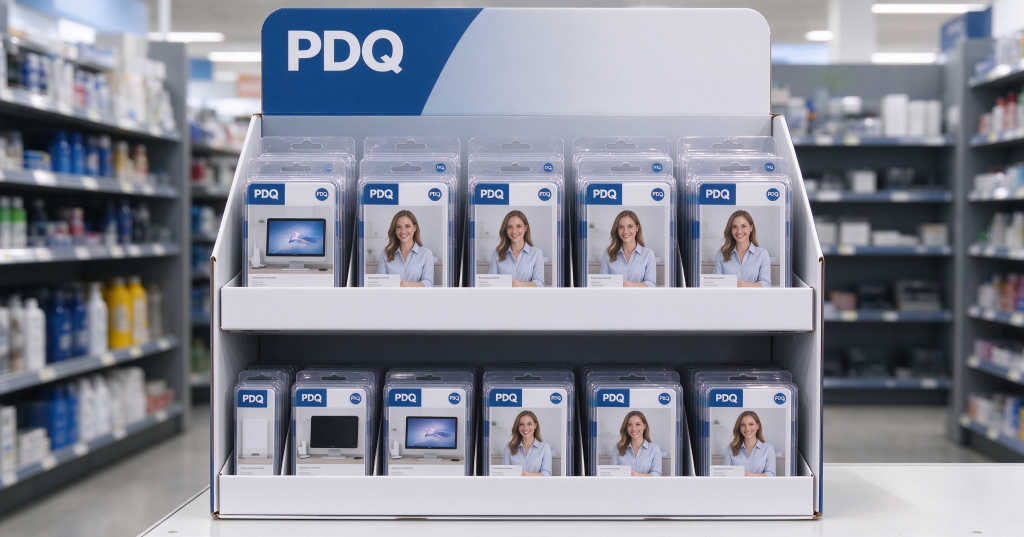
Formats such as PDQ Displays can be particularly useful when the objective is faster merchandising with minimal store-level setup.
The easier the display is to execute, the easier it is for the retailer to execute the program consistently.
2.Replenishment Determines What Happens After the First Sale
Getting a display onto the sales floor is only the beginning.
Once products begin selling, store associates need to replenish them.
This is where seemingly small design decisions can create major operational differences.
Can products be loaded from the front?
Does the associate need to remove other products first?
Can inventory be replenished without moving the display?
Does the display remain organized as inventory decreases?
A display that looks excellent when fully stocked may perform very differently after half of the product has sold.
Good display design considers that entire lifecycle.
For fast-moving products, replenishment efficiency can be especially important. The easier it is for store teams to keep the display stocked and organized, the more likely the merchandising program is to remain consistent throughout its time on the floor.
This is one reason retail display engineering should begin long before production.
Decisions made during structural development eventually become operational realities inside the store.
3. Display Design Can Reduce—or Add—Daily Store Labor
Retail displays require attention after setup.
Products move.
Inventory decreases.
Shoppers return items to the wrong position.
Graphics can become damaged.
Displays can gradually become disorganized.
A display that constantly requires employees to straighten products or repair the structure creates an ongoing labor burden.
A well-designed display should instead help maintain its own merchandising logic.
Product dividers, trays, shelves, gravity-feed structures, and appropriate product capacity can all help keep merchandise organized as shoppers interact with the display.
The goal is not simply to reduce initial assembly.
It is to reduce unnecessary handling throughout the entire retail program.
For retailers, a display that remains functional with less intervention can be far more valuable than one that looks impressive only on launch day.
4. Floor Space Is an Operational Decision
Retail floor space is limited.
Every display competes not only for shopper attention, but also for physical space inside the store.
That makes footprint an operational consideration.
A display must provide enough product capacity and visual presence without interfering with:
- Aisle clearance
- Shopper traffic
- Nearby merchandise
- Store fixtures
- Employee movement
- Replenishment activities
Large-format Pallet Displays, for example, can carry significant inventory and create strong visual presence, but they must also be engineered around the specific retail environment.
This becomes especially important for Club Store Displays, where pallet configuration, product density, transportation, and floor execution are closely connected.
The question is not simply:
“How large should the display be?”
It is:
“How much retail value can this footprint create without disrupting store operations?”
5. Transportation Decisions Eventually Become Store Problems
Transportation may seem like a logistics issue rather than a store operations issue.
But the two are closely connected.
If displays arrive damaged, unstable, incorrectly packed, or difficult to unload, the problem eventually reaches the store team.
Associates may need to:
- Repair damaged components
- Reassemble merchandise
- Replace graphics
- Dispose of unnecessary packaging
- Find alternative ways to display the product
This is why transportation should be considered during display engineering—not after the design is complete.
The way displays are packed, palletized, protected, and shipped influences how easily they can move from distribution to the sales floor.
Packaging Integration can help connect these decisions earlier in the development process so that packaging, transportation, and retail execution support the same objective.
6. Co-Packing Can Simplify Store-Level Execution
Not every retail program should arrive as separate displays, products, labels, and promotional materials that must be combined at the store.
In some programs, much of that work can happen before shipment.
Through Co-Packing Services, products can be packed, labeled, assembled, or pre-loaded into retail-ready configurations before they enter the retailer’s distribution network.
That can help reduce store-level handling and create more consistent execution across locations.
Instead of asking each store to build the same merchandising program independently, brands can shift more of the preparation upstream.
The result can be a simpler handoff:
Arrive → Place → Merchandise → Sell
For large-scale retail programs, reducing store-level complexity can be just as important as improving the display itself.
7. Display Maintenance Matters Throughout the Program
Retail displays do not stay in launch-day condition forever.
As products sell through, the display changes.
A structure that performs well at 100% capacity should still function at 50% or 20% capacity.
Engineers therefore need to consider questions such as:
- Will the display remain stable as product weight decreases?
- Will remaining products still appear organized?
- Are graphics protected from normal shopper interaction?
- Can damaged components be replaced?
- Is the display easy for store associates to maintain?
These questions are particularly important for longer-term programs.
Retail displays should be designed for how they age—not only how they photograph when first installed.
8. End-of-Program Execution Should Be Considered Too
Every temporary retail program eventually ends.
Seasonal promotions change.
Products sell through.
Displays are replaced.
Store layouts are reset.
What happens next is another operational consideration.
A temporary display should be easy to:
- Break down
- Move
- Dispose of or recycle
- Replace with the next merchandising program
Ignoring this stage can create unnecessary work for store teams.
Good retail display planning considers the full operational lifecycle—from receiving and setup to replenishment, maintenance, and eventual removal.
The Best Retail Displays Work for Both Shoppers and Store Teams
Shopper engagement and store operations should not be treated as competing priorities.
The strongest display programs support both.
For shoppers, the display should make products visible, understandable, and easy to access.
For store teams, it should be simple to set up, replenish, maintain, and remove.
That balance is what turns a display from a marketing piece into a functional retail solution.
At SDPOP, our approach to Custom Retail Display Solutions considers how displays move through the entire retail system—from engineering and Manufacturing to transportation, store execution, and shopper interaction.
Because the performance of a retail display isn’t determined only by how it looks on the sales floor.
It is also determined by how well it works every day it is there.
Retail displays affect far more than product presentation.
Their structure influences setup time.
Their configuration affects replenishment.
Their footprint impacts store flow.
Their durability determines maintenance requirements.
And the way they are engineered can either reduce operational complexity—or create more of it.
Brands that consider store operations early can create displays that are easier for retailers to execute and more consistent across locations.
The best retail display is not simply the one shoppers notice.
It is the one shoppers notice—and store teams can execute successfully.
How do retail displays affect store operations?
Retail displays can affect setup time, labor requirements, replenishment, floor space, product organization, maintenance, and merchandising consistency throughout a retail program.
Why is replenishment important in retail display design?
A display may remain on the sales floor for weeks or months. Easy replenishment helps store associates keep products stocked, organized, and accessible as inventory sells through.
Can retail displays help reduce store labor?
Yes. Displays designed for quick setup, simple replenishment, and minimal maintenance can reduce the amount of store-level handling required throughout a merchandising program.
Why should store operations be considered during display engineering?
Many store-level problems originate from decisions made before production. Considering transportation, assembly, replenishment, stability, and maintenance during engineering can prevent operational problems later.
What types of retail displays can simplify store execution?
PDQ displays, retail-ready displays, pre-packed floor displays, and pallet displays can all simplify execution when they are properly designed for the retailer, product, and merchandising program.
Build Retail Displays That Work Beyond the Design
A great retail display should work for everyone who interacts with it—from the team shipping it to the associate setting it up and the shopper taking the product home.
SDPOP develops custom retail display solutions with the full retail lifecycle in mind, including structural engineering, packaging integration, manufacturing, co-packing, transportation, and store execution.
Contact SDPOP to discuss how your next retail display program can be designed for better execution from day one.